AI
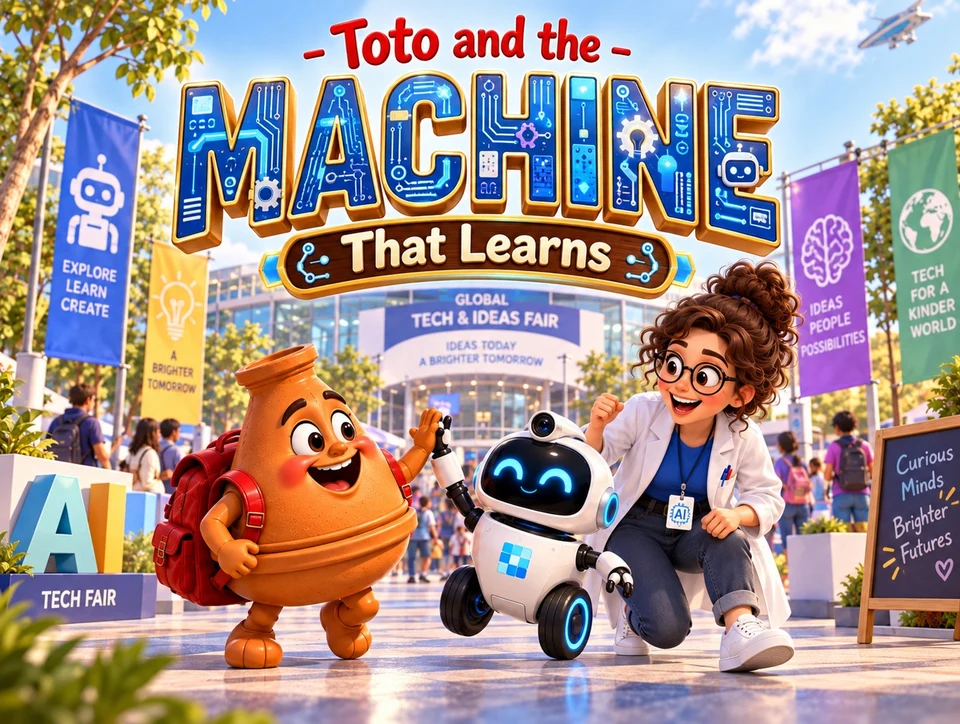
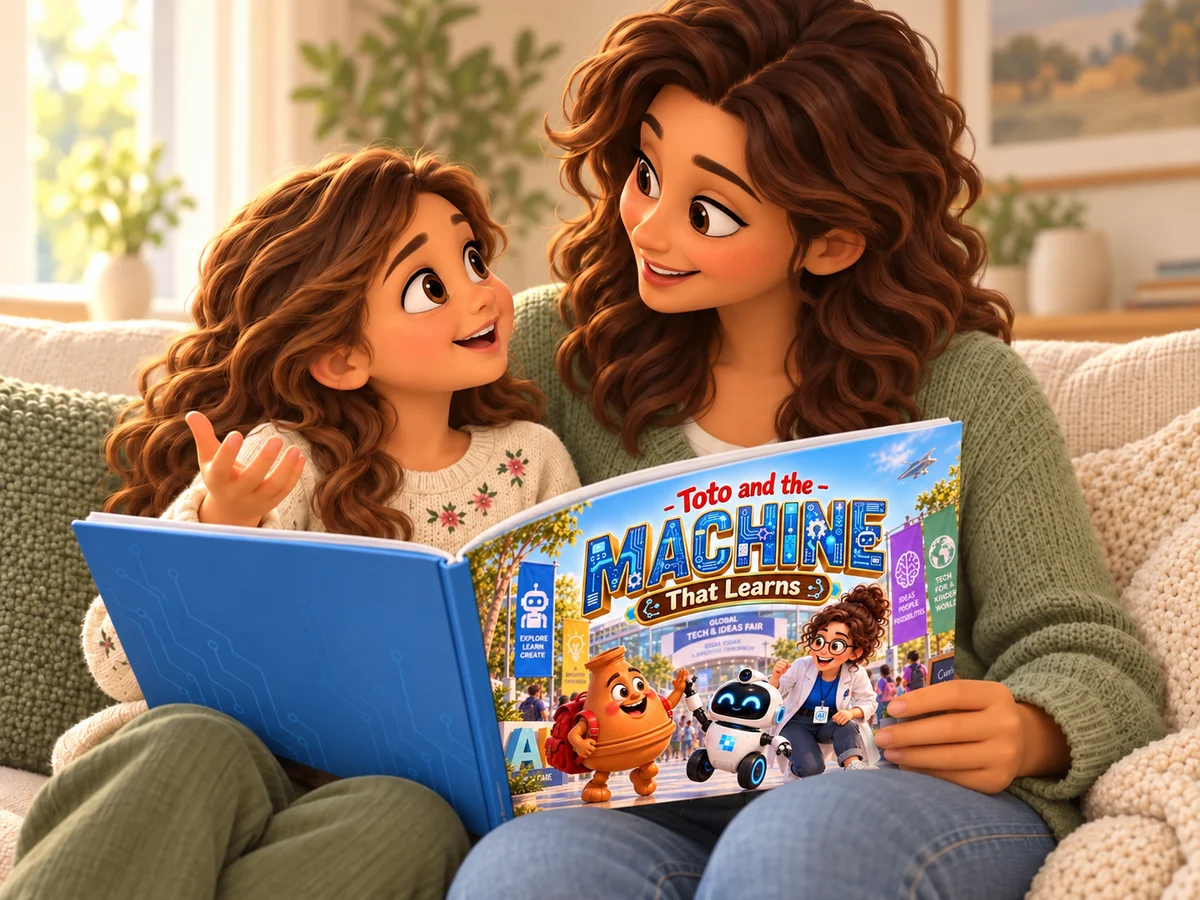
Toto and the Machine That Learns
A curious explorer. A clever little robot. Questions bigger than either of them.
Meet Pixel and Dr. Ada as Toto discovers how AI learns, what it can create, and why asking questions still matters.
Ages 4–8 · Illustrated adventure
Get the book on Amazon. Opens in a new tab.
Explore big questions with Toto
Get the book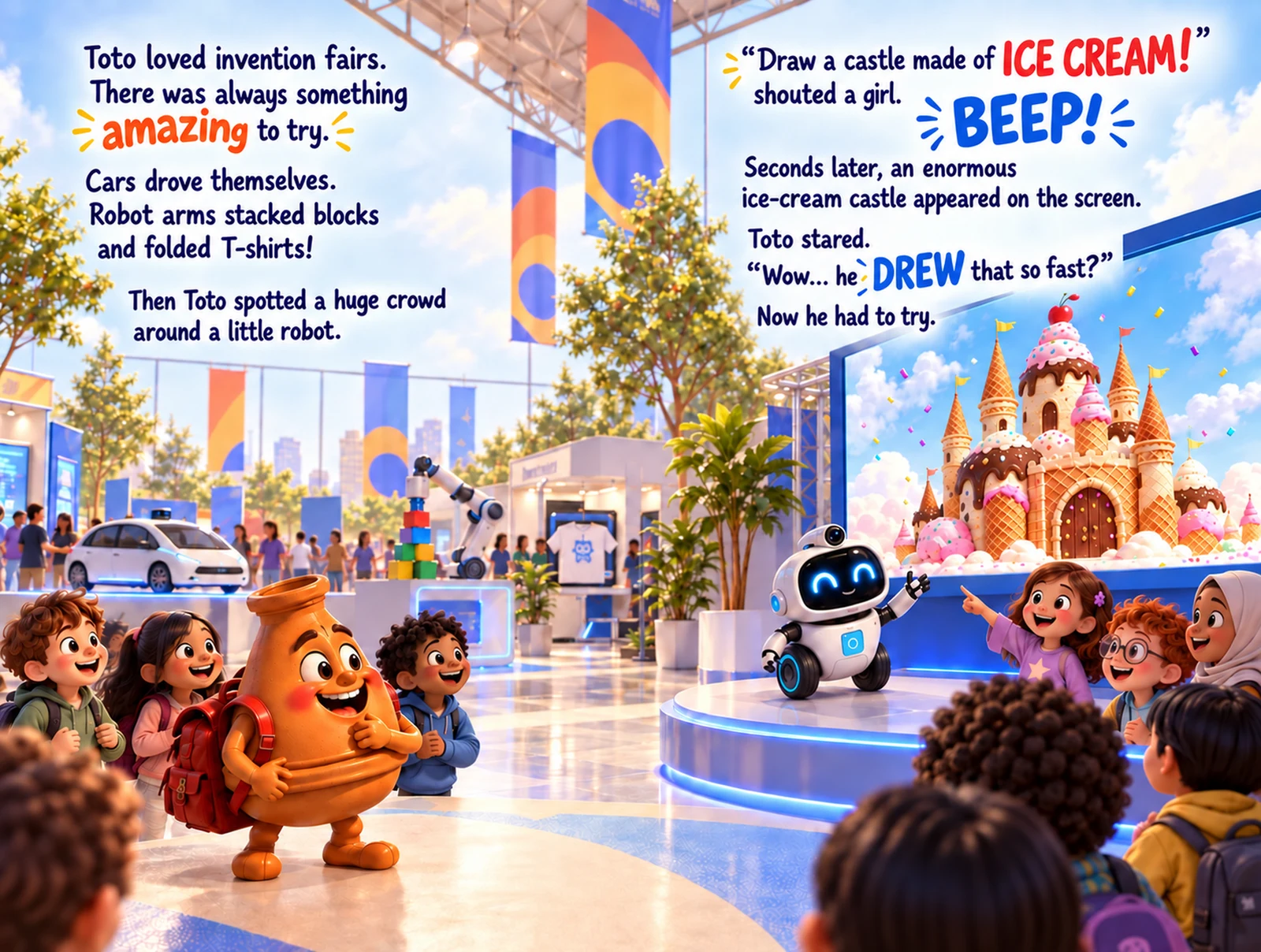
Imagine
An ice-cream castle starts with a wonderfully unusual request.
Create
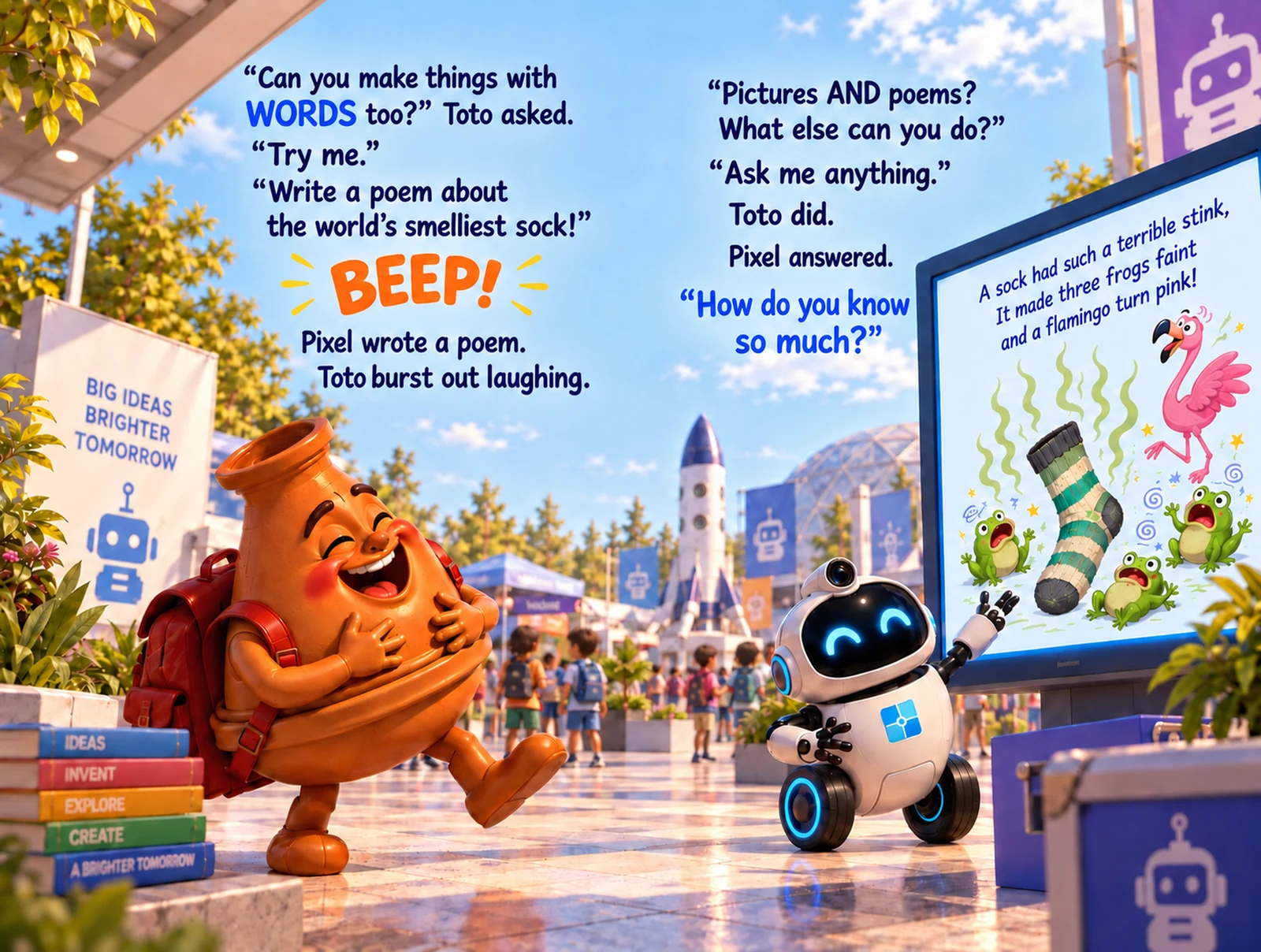
What happens when Toto asks Pixel for a silly poem?
Question
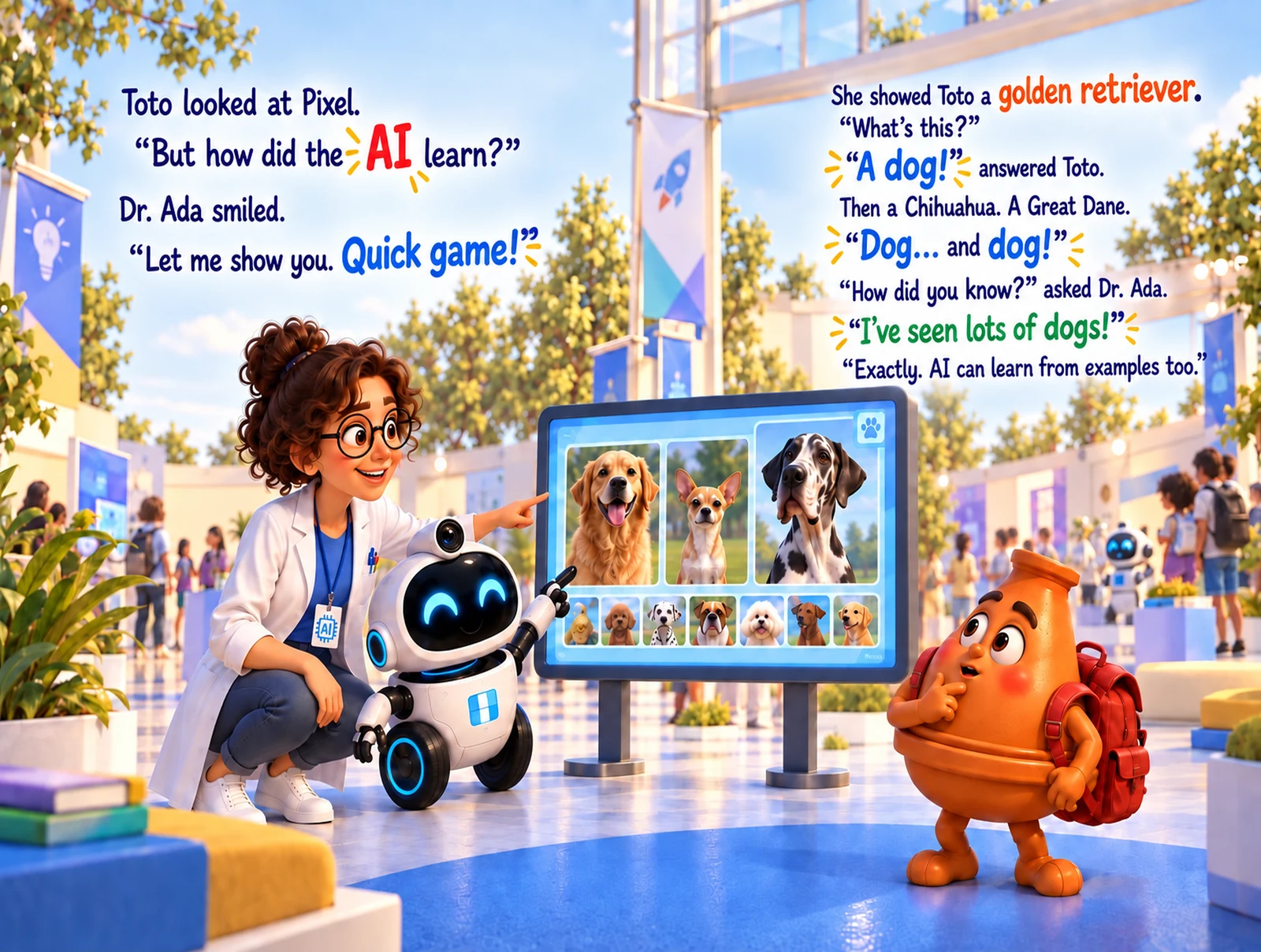
Dr. Ada shows how examples help a machine recognise patterns.
Peek inside
A few pages from the book, with little details to discover together.
Scroll to turn through the preview.
Talk about it together
The story doesn’t have to end when you close the book.
Pick one question. Listen, wonder and follow their lead.
What would you ask Pixel to create?
Start with something delightfully imaginary, like a funny poem or an impossible building. Let your child draw or describe their idea. No AI tool is needed.
Ask, “What would you tell Pixel so he could understand your idea?” Help them add one detail, without turning their description into an exercise in perfect instructions.
Make your own version together. Notice the choices your child made and keep their imagination at the centre. The machine is a tool in the story, not the owner of their ideas.
How can examples help a machine learn?
Return to Dr. Ada’s dog pictures. Ask, “What looks different? What do they have in common?” Let your child notice their own details.
Try grouping a few drawings or everyday objects by shape or colour. Then ask what happens when a new example does not fit easily. This is a playful comparison, not a complete model of AI.
Explain simply that AI looks for patterns in examples. Learning patterns is not the same as knowing everything or understanding like a person. “Let’s find out more together” is a useful next step.
Could a clever machine get something wrong?
Invite a guess before answering. Ask, “What could we do if Pixel gave an answer that didn’t seem right?” Welcome questions, including doubts about a confident answer.
Use a low-stakes example you can check together, such as a colour or a count in an illustration. Look at the evidence rather than relying on how certain an answer sounds.
Explain that AI can make mistakes and can invent information. A trusted grown-up can help check with a suitable source. Important decisions should never rest on a machine’s answer alone.
How would you describe an animal nobody has seen?
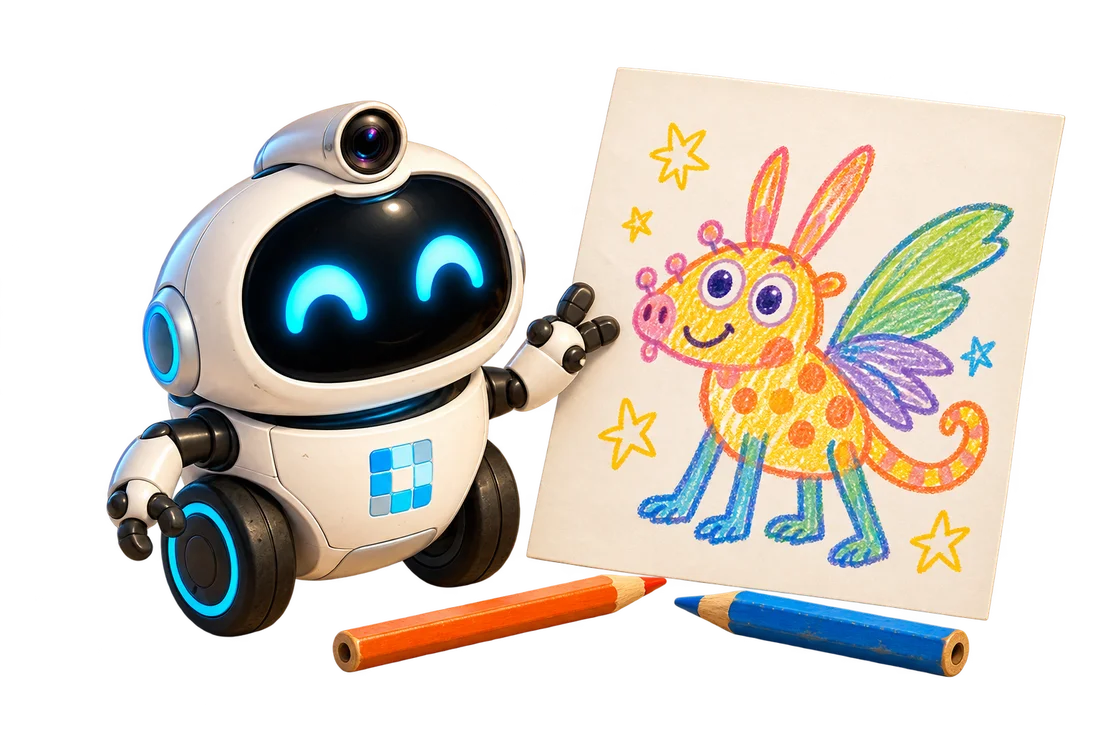
Have your child draw an imaginary creature, then describe it without showing you. Ask whether they would like you to draw what you imagine.
Compare the drawings kindly. Try, “What helped me picture it? What could you tell me next?” Differences are interesting, not failures.
Connect this to giving a machine a request, while explaining that machines and people work differently. You can explore the whole idea with pencils, without an account or a screen.
What questions would you ask Dr. Ada?
Let your child choose anything they are curious about, even if it seems unrelated to the story. Write down one question or make a picture of it.
Ask, “How might we find an answer?” Model saying “I don’t know” and looking at a source together. Check who created it and whether another trustworthy source agrees.
If you later try an AI tool, a grown-up should choose an age-appropriate service and lead its use. Do not share a child’s name, photos or private information. Curiosity can stay completely offline too.
Invent a Creature!
AI · Inspired by Toto and the Machine That Learns
- Invent a creature and keep it secret.
- Describe it using only your words.
- Can your grown-up draw what you imagined?
Then, if you want, challenge AI with the same words.
What did it get right? What did it guess?
Where should Toto go next?

WORLD · LISBON
Think Outside the Water
Explore Lisbon
WORLD · RABAT
The Stork Looking for a Nest
Explore RabatKeep the adventure going
Discover Toto Club for family activities, missions and new adventures to explore together.
Free for parents and caregivers. Signups opening soon.