WORLD · RABAT, MOROCCO
Toto in Rabat
The Stork Looking for a Nest
A curious traveller. A stork looking for home. A city to discover together.
Explore Rabat with Toto and Kiki, and wonder what makes a place feel like home.
Ages 4–8 · Illustrated adventure
Get the book on Amazon. Opens in a new tab.
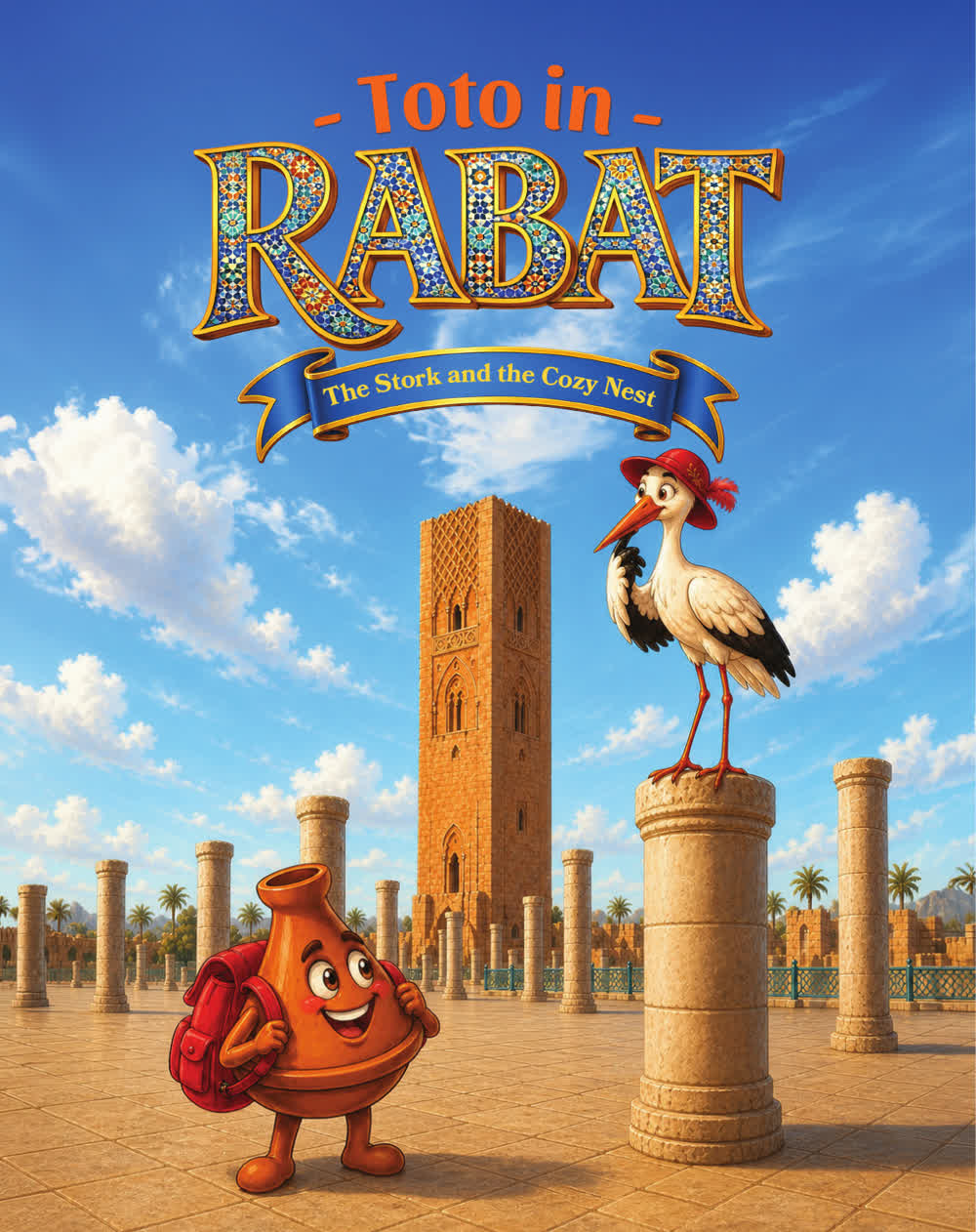
Explore Rabat with Toto
Get the book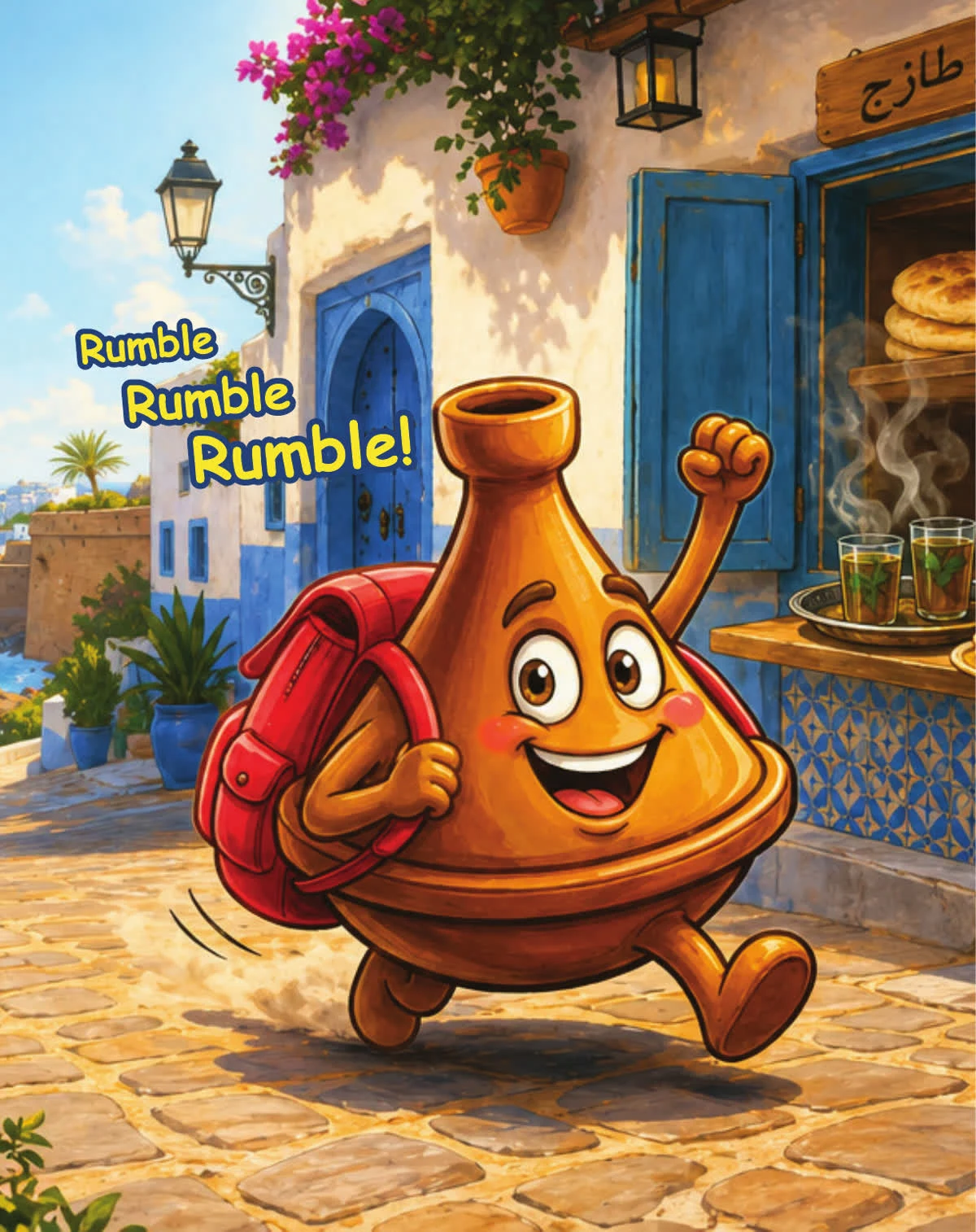
Notice
A bakery, a rumbling tummy, and a reason to stop and look.
Explore
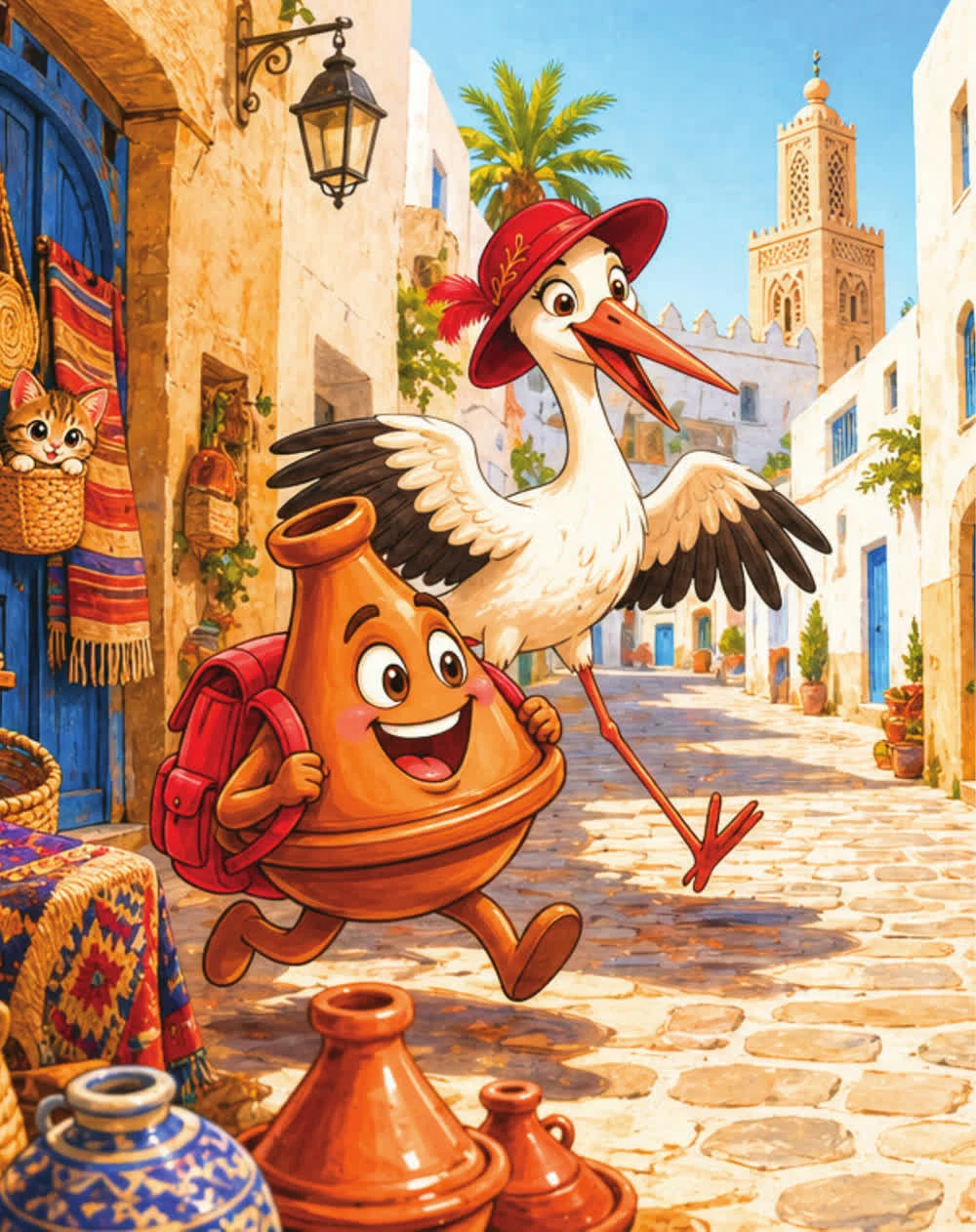
Follow Toto and Kiki through the city’s market streets.
Discover
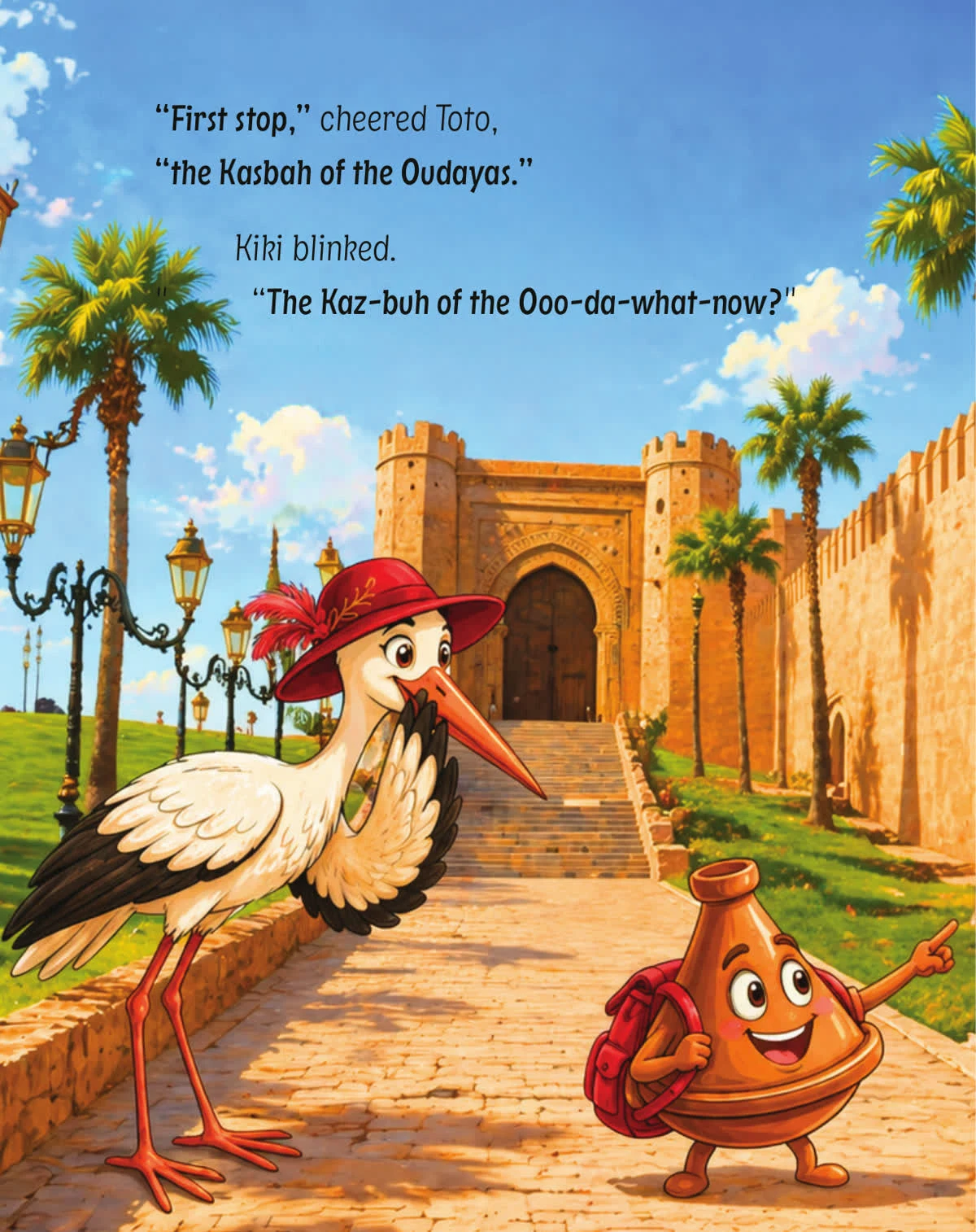
Visit the Kasbah of the Oudayas. What would you notice first?
Peek inside
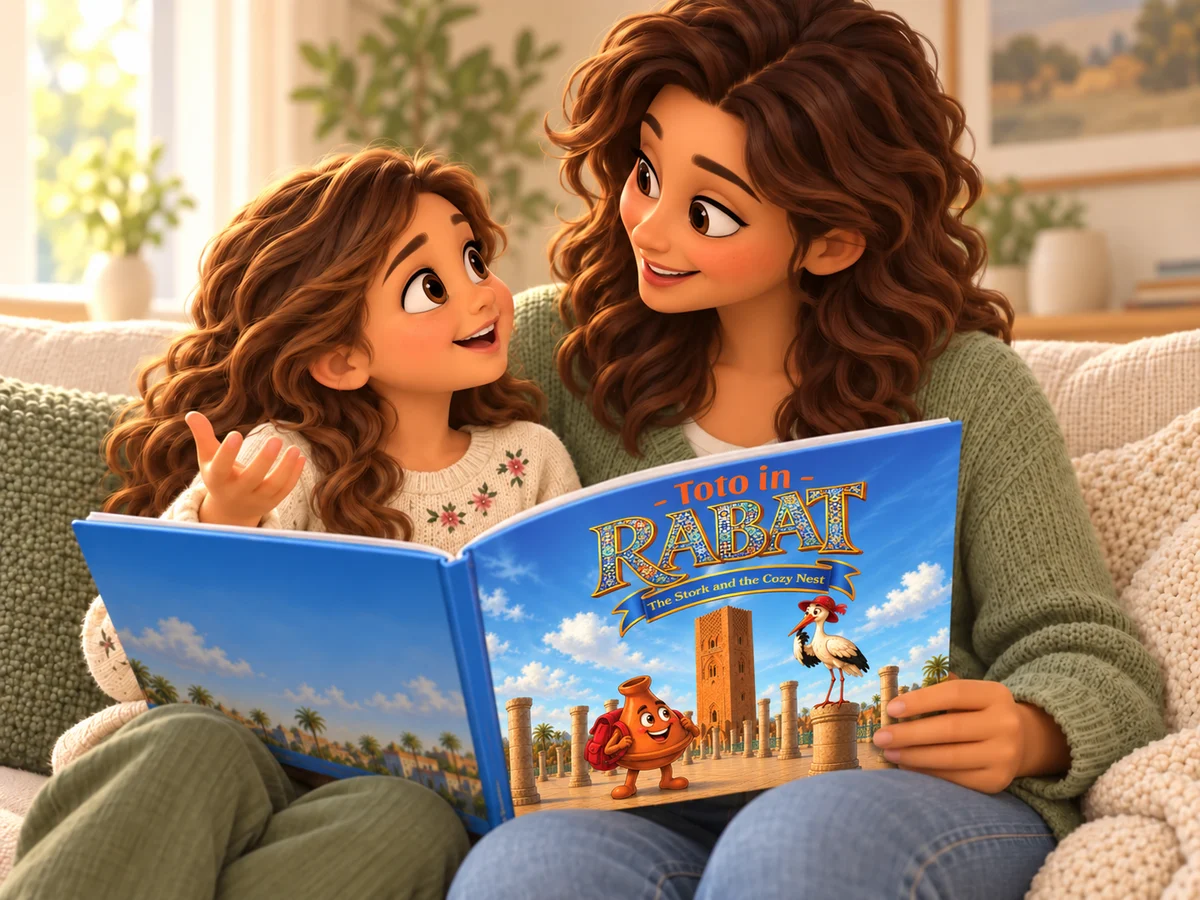
A few pages from the book, with little details to discover together.
Scroll to turn through the preview.
Talk about it together
The story doesn’t have to end when you close the book.
Pick one question. Listen, wonder and follow their lead.
What would make a nest feel like home?
Begin with Kiki: “What might a stork need in a place to rest?” Let your child point, draw or imagine. Shelter, company and somewhere safe might all be part of their answer.
Ask, “What helps you feel comfortable somewhere new?” Listen before offering your own ideas. They can keep talking about Kiki if they prefer not to share something personal.
Draw an imaginary home together. Invite your child to explain one choice, without correcting their design. Different people and animals need different things.
Which place in Rabat would you like to explore?
Let your child choose an illustration rather than recall a place name. Ask, “What caught your eye?” Give them time to look closely.
Imagine a visit: “What might we hear here? What would you ask someone who lives nearby?” Distinguish something you can see from something you are guessing.
Notice something familiar and something new. Avoid treating one picture as the whole of Morocco. Choose one genuine question to look up together later.
How could you help someone who is looking for a place to belong?
Start with the characters: “What could Toto ask Kiki?” Let your child suggest words or act out a conversation with toys.
Try, “How could we find out what would help?” Show that asking and listening matter, because a friend may want something different from what we would choose.
If they want, connect this to welcoming someone new at a familiar place. Suggest a small, kind invitation, while making clear that grown-ups are responsible for keeping everyone safe.
What little details do you notice in the market?
Look together without a timer. Ask your child to choose something that interests them, then describe it in their own way.
Try, “What do you think it might be used for?” Welcome a guess, and say when neither of you knows. A picture is a starting point for curiosity, not a test.
Draw your own imaginary market stall. Let your child decide what it offers and what they would ask a visitor. Follow their interests rather than setting a list to complete.
Where would you take Toto in your own neighbourhood?
Choose a small, familiar place. Ask, “Why would you show him that?” Ordinary places can be just as interesting as famous landmarks.
Imagine telling Toto what happens there. Your child could draw a route, make a pretend invitation or tell a short story.
On a grown-up-led walk, notice one detail you usually pass by. Respect people’s privacy and leave birds and real nests undisturbed. Stop whenever your child has had enough.
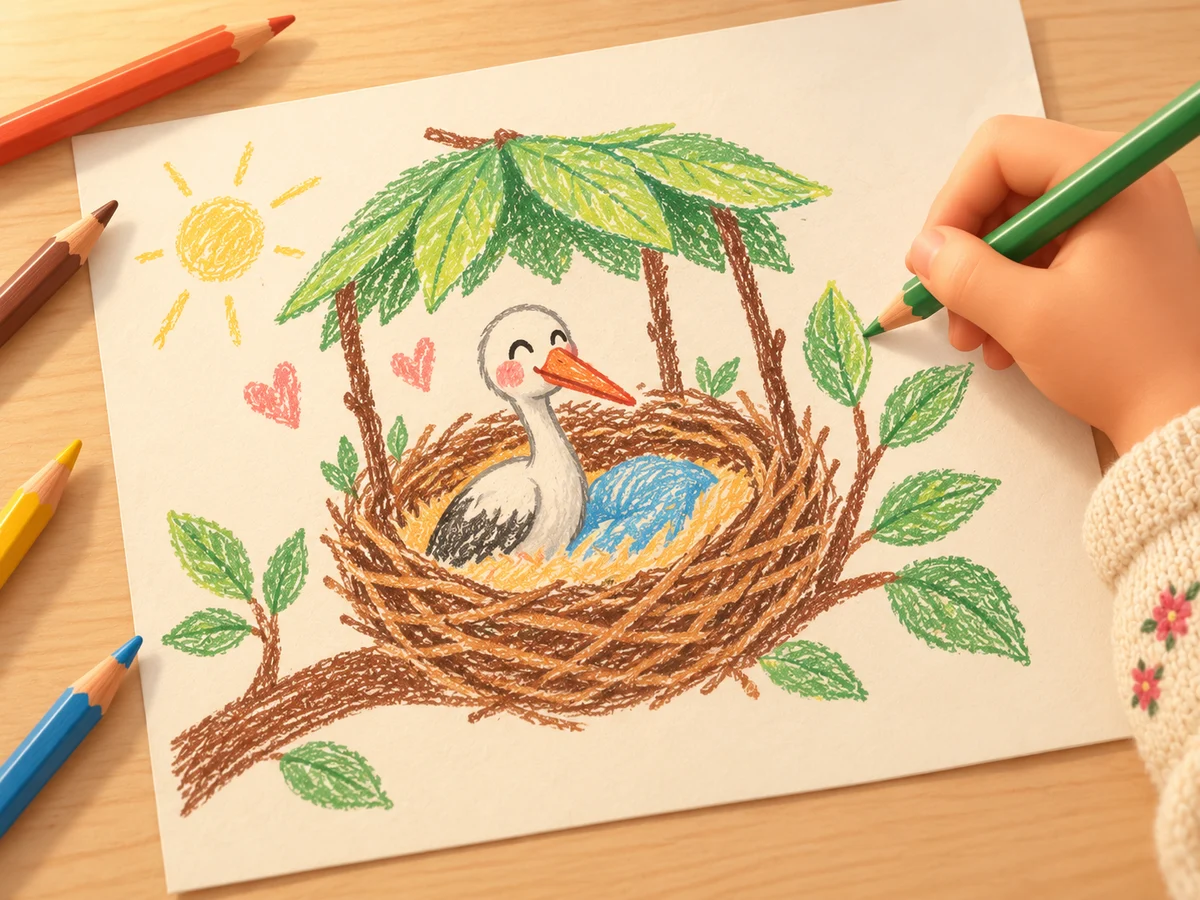
Imagine a welcoming nest
Paper · colouring pencils
Imagine a home
Draw a welcoming nest for an imaginary bird.
Make it cosy
Add somewhere to rest and shelter from the weather.
Tell its story
What would help your bird feel at home? Share one detail with a grown-up.
What makes a place welcoming?
Ask what the imaginary bird might need before adding your own ideas. There is no perfect drawing: invite your child to explain one choice, then listen.
If you look for birds together, watch from a safe distance. Leave real nests undisturbed. This is a drawing activity, not a plan to build or move a wild bird’s nest.
Draw together. Leave real nests undisturbed. No book needed.
Get the bookWhere should Toto go next?
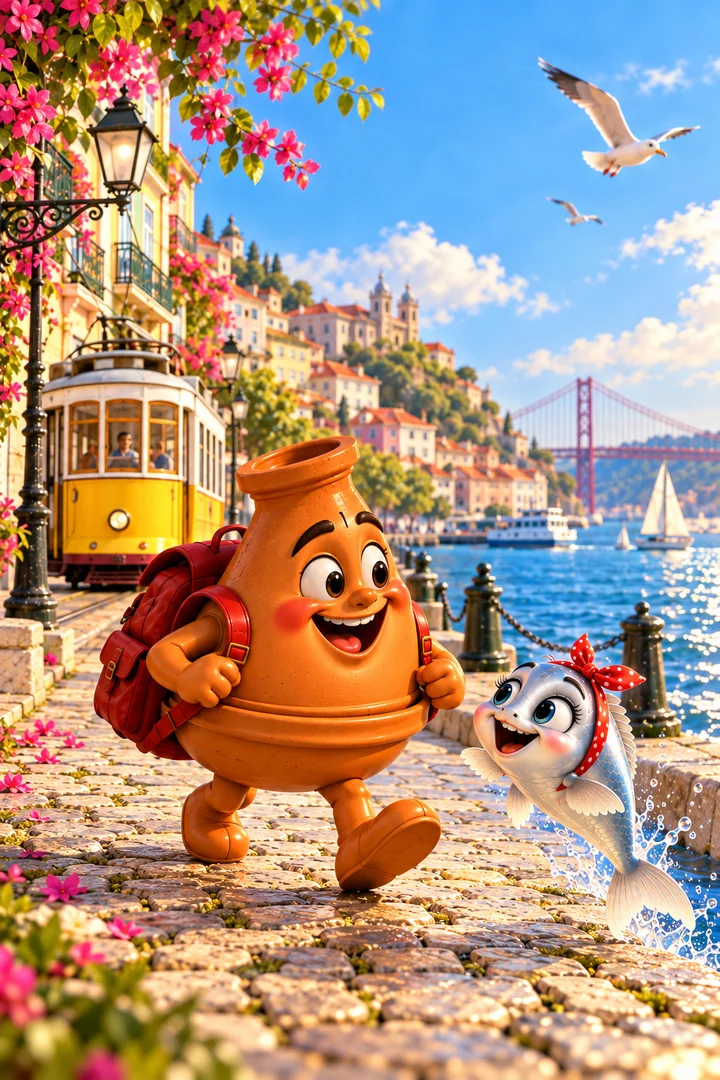
WORLD · LISBON
Think Outside the Water
Explore Lisbon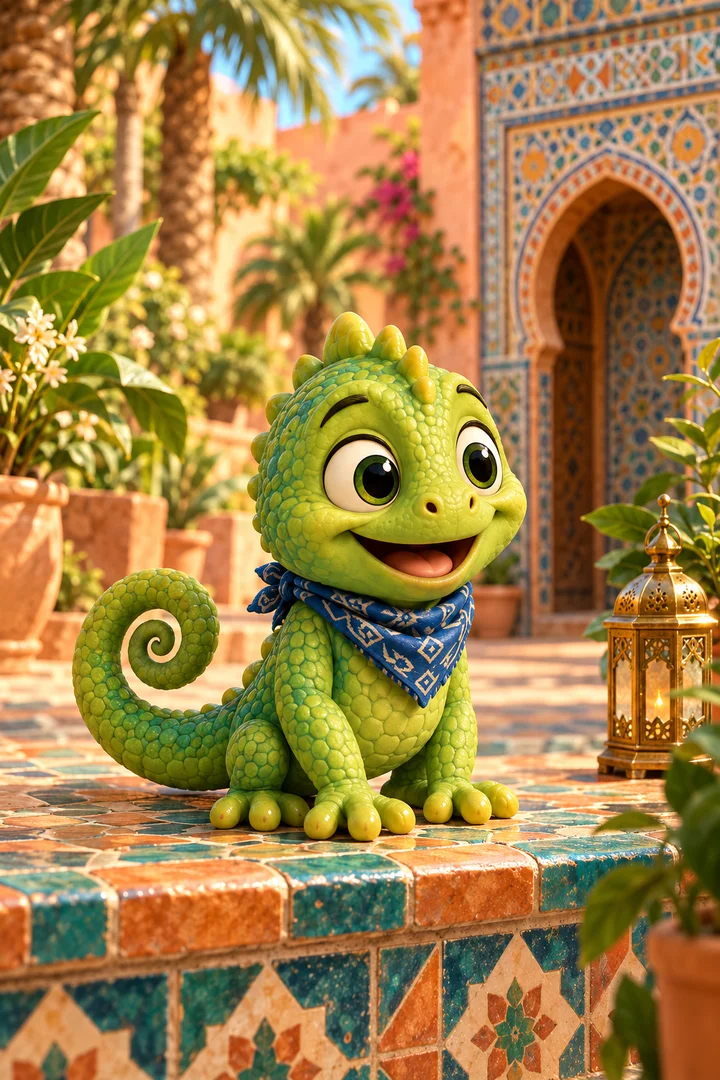
WORLD · MARRAKECH
The Chameleon Who Lost His Colors
Explore MarrakechKeep the adventure going
Discover Toto Club for family activities, missions and new adventures to explore together.
Free for parents and caregivers. Signups opening soon.